





What Makes an Iconic Horror Villain? The Psychology Behind Horror’s Greatest Monsters
The greatest horror villains don’t simply kill people. They tap into fears we’ve carried throughout human history.
Quick Answer: Iconic horror villains become unforgettable because they represent universal fears, possess a unique identity, remain unpredictable, and challenge characters on both a physical and psychological level.
Every decade introduces new horror villains, yet only a handful become cultural icons. Long after the credits roll, their images remain instantly recognizable, their names become part of pop culture, and their influence shapes future horror films.
So what separates an iconic villain from one audiences forget by the next weekend?
The answer isn’t simply a terrifying appearance or a high body count. Truly memorable horror villains succeed because they connect with something much deeper: the psychology of fear.
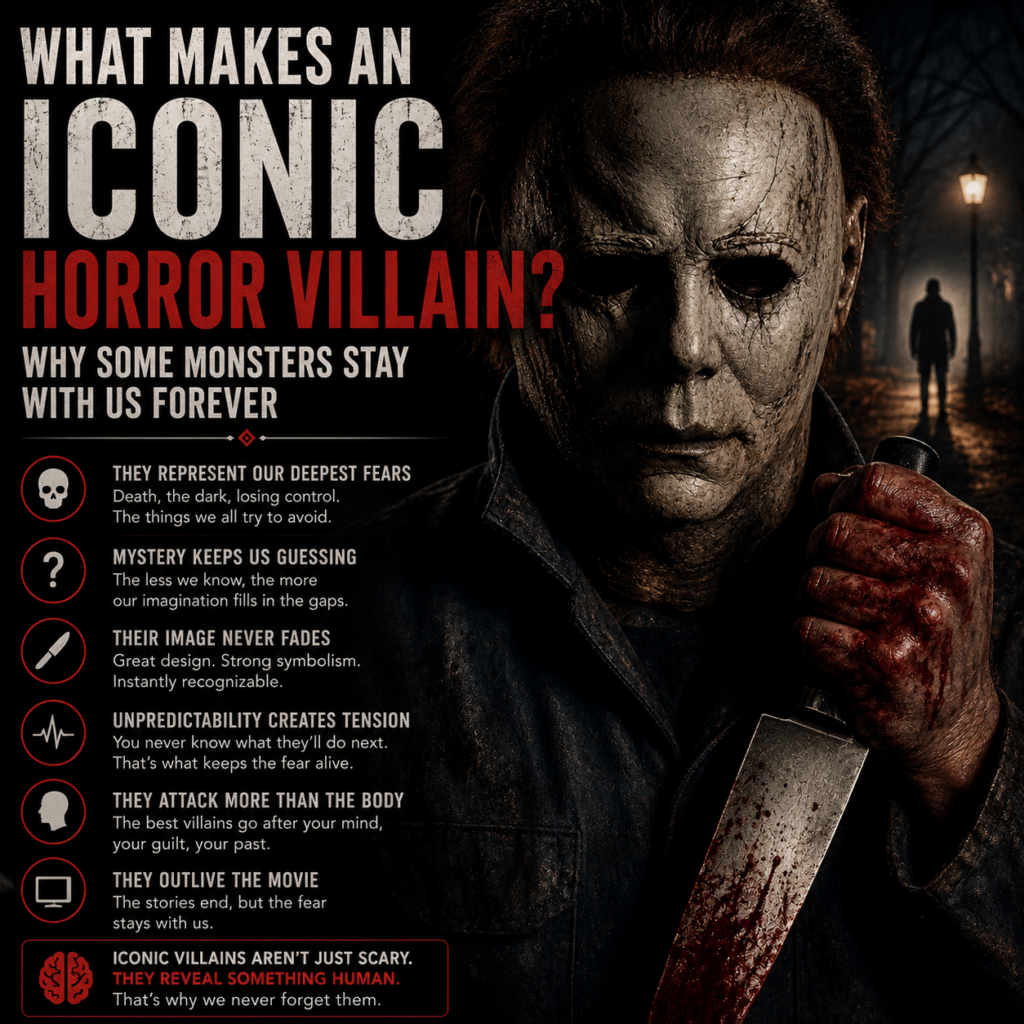
They Represent Universal Fears
The greatest horror villains symbolize fears that nearly everyone understands.
- The fear of death.
- The fear of losing control.
- The fear of being watched.
- The fear of isolation.
- The fear of the unknown.
These fears are timeless. While trends in horror evolve, the emotions beneath them remain remarkably consistent.
Mystery Makes Them More Frightening
One of the quickest ways to weaken a horror villain is to explain everything.
The unknown has always been one of horror’s most powerful tools. When audiences don’t fully understand a villain’s motives, origins, or limitations, their imagination begins filling in the blanks.
That uncertainty creates lasting fear because mystery keeps the audience engaged long after the story ends.
Appearance Matters, But Symbolism Matters More
Great horror villains are visually memorable, but appearance alone isn’t enough.
Their design often reflects something deeper about who—or what—they represent.
- Distinctive silhouettes.
- Recognizable masks or features.
- Simple but unforgettable visual identities.
- Symbolic clothing or objects.
When audiences can recognize a villain from a silhouette alone, that character has achieved something extraordinary.
Unpredictability Creates Tension
Fear depends on uncertainty.
If audiences always know what a villain will do next, suspense disappears.
The best horror villains constantly force characters—and viewers—to question what comes next.
- Unexpected choices.
- Unclear motives.
- Changing tactics.
- Relentless persistence.
Unpredictability keeps every encounter feeling dangerous.
The Best Villains Challenge More Than Survival
Great horror isn’t simply about staying alive.
The strongest villains force characters to confront emotional weaknesses, painful memories, guilt, grief, or personal failures.
In many cases, defeating the villain requires emotional growth as much as physical survival.
That’s what makes the conflict meaningful.
Why Audiences Never Forget Them
Iconic villains become larger than the stories they inhabit.
They inspire discussion, fan theories, sequels, merchandise, Halloween costumes, and endless debate because they evoke strong emotional reactions.
People remember characters that made them feel something powerful.
Fear creates unforgettable memories.
What Writers Can Learn
Whether you’re writing horror or simply studying great storytelling, memorable villains are built on psychology rather than spectacle.
- Create fear before violence.
- Leave room for mystery.
- Build symbolism into the design.
- Challenge characters emotionally.
- Make the villain unforgettable without explaining everything.
The scariest monsters aren’t always the strongest.
They’re the ones audiences continue thinking about long after the story ends.
Conclusion
Iconic horror villains endure because they represent something universal. They embody fears we all recognize while remaining mysterious enough to keep our imaginations working long after we’ve left the theater.
As both an actor and horror screenwriter, I’ve always believed the most frightening villains aren’t defined by how many victims they claim. They’re remembered because they expose something about ourselves—our fears, our vulnerabilities, and the unknown that exists just beyond the light.
Frequently Asked Questions
What makes a horror villain iconic?
An iconic horror villain combines mystery, symbolism, memorable design, unpredictability, and psychological depth that resonates with audiences.
Why are horror villains so memorable?
They represent universal fears while creating emotional experiences that audiences continue thinking about long after the movie ends.
Is mystery important in horror?
Yes. The less audiences fully understand a villain, the more their imagination contributes to the fear.
Do horror villains need a backstory?
Not always. Some of the most frightening villains remain mysterious because unexplained evil often feels more unsettling than fully explained motives.
Why do classic horror villains remain popular?
They embody timeless fears and possess distinctive identities that continue connecting with new generations of audiences.
- Published author with titles including Memorial Day
- Screenwriter developing horror and thriller projects since 2016
- Background in indie film and acting since 2004
- Award-winning script editor focused on psychological horror
- Passionate about creating emotionally grounded horror stories that resonate with audiences.