





Why Horror Remains Hollywoods Most Reliable Genre Investment
Quick Answer: Horror remains one of Hollywoods most dependable genres because it consistently delivers strong returns on relatively modest budgets, attracts consistent audience demand, and offers producers a unique balance of creative freedom and financial viability.
In an industry defined by changing trends, shifting audience preferences, and evolving distribution models, very few genres maintain long term stability. While blockbuster franchises rise and fall, horror continues to prove itself as one of the most reliable investments in film.
From independent productions to major studio releases, horror consistently delivers results because it operates at the intersection of creativity and practicality. It allows filmmakers to explore bold ideas while still aligning with the financial realities of modern filmmaking.
Why Horror Films Work With Lower Budgets
One of horror’s greatest advantages is its ability to succeed without massive production costs.
Unlike action or fantasy films that depend heavily on large scale effects and spectacle, horror often relies on atmosphere, tension, and character driven conflict. A well executed concept can create a powerful experience without requiring extensive resources.
The same logic applies to casting. Big budget genres often lean on expensive A-list stars to draw an audience, but horror rarely needs them. A strong concept and a committed cast can carry a film on their own, and many of the most successful horror films were built around unknown or affordable actors. At most, a single recognizable name is usually all a project requires.
In fact, horror has a long history of launching stars rather than depending on them. Before they were household names, Johnny Depp made his film debut in A Nightmare on Elm Street, Tom Hanks first appeared in the slasher He Knows You’re Alone, and Leonardo DiCaprio got his start in Critters 3. Kevin Bacon, Jamie Lee Curtis, Renée Zellweger, and Drew Barrymore all carry early horror credits too. The next time you watch a horror film, try counting how many future A-listers got their first break in the genre. The list is longer than you would think.
This creates several key advantages for producers:
- Lower overall production costs
- Reduced financial exposure
- Greater flexibility during development
- More opportunities to greenlight original ideas
Because the barrier to entry is lower, horror allows both studios and independent filmmakers to take creative risks while maintaining manageable budgets.
Strong Return on Investment Continues to Drive Interest
At its core, filmmaking is both an art and a business. Producers are constantly evaluating projects based on risk versus reward.
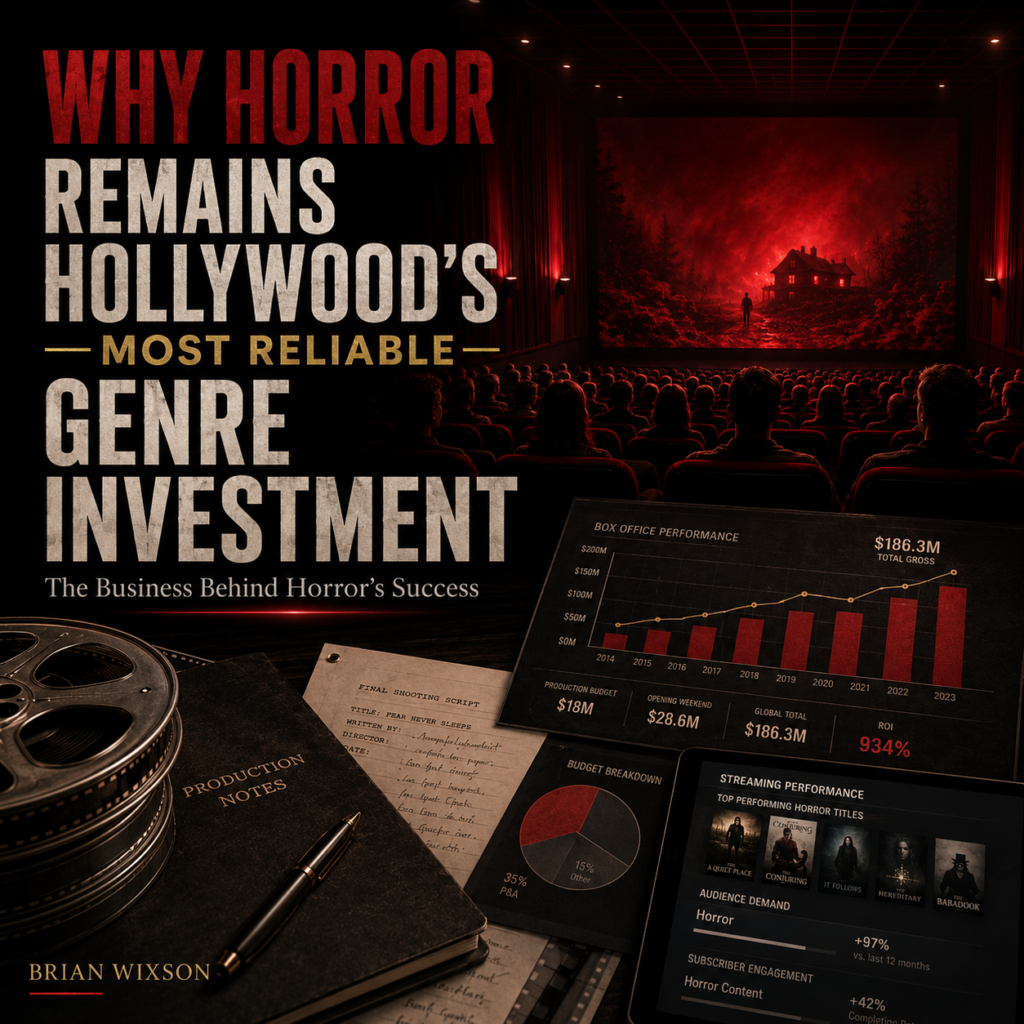
Horror consistently performs well in this area because it has a long history of generating significant returns relative to its cost.
A compelling concept can often drive audience interest regardless of whether the film features established stars or franchise recognition. That ability to succeed based on idea alone makes horror uniquely attractive from a financial standpoint.
When a film can be produced efficiently and still reach a wide audience, it becomes a strong investment opportunity.
Audiences Consistently Seek Horror Content
One of the reasons horror remains so reliable is simple. Audiences never stop looking for it.
The emotional experience horror provides is difficult to replicate in other genres. It engages viewers on a primal level through:
- Fear
- Suspense
- Tension
- Adrenaline
- Emotional release
These elements create a viewing experience that audiences actively seek out. Whether in theaters or on streaming platforms, horror remains a genre people return to again and again.
Horror Adapts to Cultural Fears
Another reason horror continues to thrive is its ability to evolve with society.
The most effective horror stories often reflect real world anxieties. Throughout different periods, the genre has explored themes related to technology, isolation, disease, social tension, and uncertainty.
As the world changes, horror changes with it. This adaptability allows the genre to remain relevant across generations while continuously offering new perspectives on fear.
Streaming Platforms Have Expanded Demand
The growth of streaming services has significantly increased demand for horror content.
Unlike traditional theatrical models, streaming platforms require a constant pipeline of new material to maintain engagement. Horror fits this model particularly well because audiences are open to discovering new titles and concepts.
Platforms continue investing in:
- Original horror films
- Psychological thrillers
- Limited series
- Science fiction horror
- International productions
This expansion has created more opportunities for writers, filmmakers, and producers to bring new ideas to market.
Why Originality Still Thrives in Horror
Many genres have become heavily reliant on established intellectual property and existing franchises. Horror remains one of the few areas where original concepts can still break through.
A strong, clearly defined idea can immediately capture attention. Whether it involves a unique setting, an unconventional threat, or a new twist on a familiar premise, originality continues to be rewarded.
This makes horror especially valuable for both emerging and experienced creators looking to develop new material.
What Producers Look for in Horror Projects
While horror offers flexibility, producers still evaluate projects based on specific criteria.
- A clear and marketable concept
- Strong and relatable characters
- Meaningful emotional stakes
- Practical production requirements
- A distinct hook that separates the project from others
Concept may attract attention initially, but execution determines long term success. The strongest projects balance creativity with production awareness.
Why Horror Is a Strong Entry Point for Writers
For screenwriters, horror remains one of the most accessible ways to enter the industry.
A well written script with a compelling concept can stand out without requiring large scale production resources. Because producers are consistently looking for new ideas, horror provides opportunities for emerging voices to gain attention.
That accessibility does not reduce the importance of craft. Strong writing, believable characters, and effective pacing remain essential.
Conclusion
Horror continues to succeed because it aligns both creatively and financially with the realities of modern filmmaking.
Lower budgets, consistent audience demand, adaptability, and strong return potential have made it one of the most reliable genres in Hollywood.
For producers, it offers manageable risk. For audiences, it delivers a unique emotional experience. For writers, it provides opportunity.
That combination is rare, and it is exactly why horror continues to stand out as one of the most dependable investments in the industry.
- Screenwriter, author, and script editor based in New Jersey
- Specializes in horror, science fiction, thriller, and suspense storytelling
- Background in acting, script development, and independent filmmaking
- Known for creating character driven stories grounded in realism
- Focuses on high concept and psychologically driven horror IP